Showing posts with label literacy. Show all posts

Monday, 17 September 2012

App-ropriate Social Stories

There are numerous social skill intervention programs around to help foster the development of social behaviour, encourage friendships and build confidence. But how many of them are effective for our children with SEN?

Most are designed to be all light and fluffy, fun and stimulating. But are children able to transfer the skills learnt in a discussion, play or story about a teddy bear and his friends, into real life situations? Do these sessions actually fulfill the requirement? In my article Literally Relevant Literacy I highlighted the importance of creating engaging literacy activities, featuring the children themselves. Utilising their experiences, memories and schema to encourage greater engagement with the task, in turn providing more labels if you like, under which to store their new information.

The same can be said for developing social skills. Surely 'Sammy' is more likely to engage with a story about him and his friends, in his school or his house, playing with toys they recognise and use regularly. I would suggest that this method would make it more likely that 'Sammy' will associate the story with his own life and transfer the knowledge into real life.

I've discovered another wonderful ipad app that makes it unbelievably easy to do just that! Book Creator is available for download at just £2.99 from the itunes store. It's easy to use interface allows you to use your own photos and words to create the story you want. You can even add music or a voice over. Use photos of everyday situations or encourage the children to think about the story beforehand by asking them to act out the scenes. Click here to visit the itunes store.

Today's technology is putting relevant material literally, at your finger tips.

Monday, 10 September 2012

Teaching Letter Formation

I've further embraced the ipad generative landslide and searched high and low for, what I consider to be the best apps designed to encourage correct letter formation.

Fun and games has got to be the way to encourage children to become writers, develop a passion for writing and foster literal skills. Add a stylus to your ipad for further possibilities

Coming out on top has to be Letter Formation Phonics... It's fun, easy and highly visual. It displays the correct formation whilst allowing extra features such as snap shots and word creators. The computer generated voice may tire adults eventually but children seem to engage well with the futuristic qualities, and it's great for encouraging blending.

Touch and Write is now available for free! It has a handy word bank which makes it ideal for learning to form names, or even weekly spellings. You can change your writing tool and paper type, creating a visual feast for visually stimulated children. The only downside is the lack of British voice... It's no biggy though, turn off the sound and provide your own praise!

Alphabet Tracer not only provides the option of British voice but also provides the British Sign Language finger spelling. It's a little bland in comparison to the above apps but useful all the same.


Friday, 3 August 2012

Literally Relevant Literacy

It's so difficult to wind your head around abstract ideas

Learning something completely new from page one. Imagine just about getting to grips with one topic when suddenly, it's changed to something new, something completely alien again. How frustrating must it be. Imagine then, what it must be like for our children, constantly changing topics, methods and goals.

It doesn't have to be so. Careful planning and suitable preparation can ensure that all learning activities, all opportunities and all experiences are utilised effectively to promote active engagement and achievement.

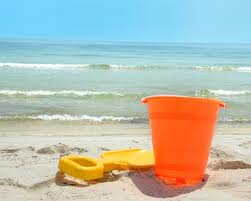
A common topic for the early years stage is that of the seaside. By ensuring children actively experience a glimpse of the topic for themselves, all learning activities can be tailored specifically to that child's prior knowledge and understanding. A must for children with Special Educational Needs, where first hand experience, repetition and engagement are key to gaining knowledge and understanding in  any given topic. The scale of experience varies greatly, from a day spent playing on the beach, a trip to an aquarium or a bucket of sand and water, each of these provide ample ammunition for personally tailored learning experiences.

Use photographs, props, smells, textures and tastes to elicit a response, spark a stimuli and engage the learner, creating not just knowledge, but memories to support it and foster commitment to memory.

Think of it this way... It would be really hard to learn to play a musical instrument without having the instrument in the first place.

Build on a memory, make a dream.

New Resources added

Take a peek at our downloadable resource section..


Royalty free Letters and Sounds tabletop words (Stage 2)

Ever get annoyed with using huge flashcards? 

Here I have created a set of easy to store, easy to use, Letters and Sounds Stage 2 word cards. They are royalty free.... that means no distracting logos or emblems....


Use alongside the sentence builder grids for fun and versatile activities.

One more thing, smaller flashcards means more fine motor skill refinement... We like that!

Visit the downloadable resources section for more free goodies.

Tuesday, 14 February 2012

New resources added


New resources added to the printable resources section.

Magnetic Literacy

Encourage your children's literacy development by filling your fridge with these high frequency words. 


High frequency words
Not only will you help to foster an enjoyment in literacy development but you will also be reinforcing there sight vocabulary, ensuring they recognise the high frequency words in different formats and context then that which is presented to them in their reading books.
Fridge magnets for literacy

My daughter loved to leave messages on the fridge and eagerly awaited a reply from the next kitchen visitor, it only takes 10 seconds to do but these activities really move their language and literacy comprehension forward, without seeming like a literacy task at all.

You can also buy magnet 'shopping list' words... Why not ask your child to help write the shopping list by asking them to find the word bananas etc..

Click here to visit The Fridge Magnet Shop.


Saturday, 28 January 2012

Motor skills development for iPad users

As promised here is my first educational iPad recommendation. 


Dexteria motor development
  Dexteria by BinaryLabs features specific activities developed to help promote the development of fine motor skills. The iPad has a wonderfully sensitive touch screen, making it highly usable. 

Through the use of engaging activities children will be unconsciously fine-tuning their hand-eye coordination, fine-motor skills and, when engaged in conversation about the task, language skills as well. 
Sample activity for fine motor skill development

Activities include finger isolation, for either hand, stoke development and finger control. The app also records progress and time spent practicing. Even very young children will enjoy these activities, feeling much more like a game then work, you shouldn't have any trouble getting youngsters engaged with the task.

Stroke development and letter formation
The app is available on both the iPad and iPhone. Click here to visit the app website and download.

Friday, 27 January 2012

Name grids

Some children begin school already  knowing how to write their name, some do not. For some it is the first real hurdle they will face in their school life and can become a stressful experience. Use these guides to help build confidence in letter formation, spelling and pencil grip, in a fun and accessible way.

Example name grid
I've added a set of three name grids to the printable resources section. To make the most out of these, print all three on A4 paper, write the desired name in the appropriate font (the best colour for tracing over, I find, is grey). Laminate each sheet so they can be used over and over again. Encourage the child to trace over the letters of their name before attempting to copy it free hand in the space provided.

Start off with the largest font and only move on once confidence has been gained in letter formation and spelling. For added practice, print off and laminate an extra copy to send home, children will love to demonstrate how well they are doing to their parents. Build their confidence by photocopying the sheet, for them to keep, when they have done well.

Click here to visit the printable resources section.

Sunday, 8 January 2012

Punctuation comics

Children are rewarded in SAT's for the appropriate use of punctuation but it can be difficult to teach the appropriate use for each. Yesterday I was in the grip of writing a piece for my coursework when I couldn't, for love nor money, work  out if my semicolon was in the right place.... I stumbled across a fantastic little site, perfect for years 5 and 6 in the run up to Sat's.

How to pause - The Oatmeal
The Oatmeal use cartoons and comedy to define the appropriate use of punctuation, if it works for me it'll work wonders for our KS2 children! Click here to take a look at their comic strips.

Keep an eye on the printable resources section, I'll upload my punctuation pyramid soon.

Friday, 16 December 2011

Primary School League Tables 2011: How did your school do?

Published today are the results of the 2011 National KS2 Numeracy and Literacy assessments. There are definitely some surprising results in there!

The Guardian have made it super easy to view the results of primary schools near you by creating an interactive map. Simply click on the dot that interests you.

How did your school do in the assessments? Click here to use the interactive service.


Monday, 12 December 2011

"Pupils to fail new reading test"

The BBC recently reported that two-thirds of primary aged school children will fail the new phonics reading check when it is introduced into the system next year. You can read the full story here.

Every school I've ever worked in has had a differing level of reading ability throughout the year groups and all have adopted a different approach to the teaching of reading and word knowledge. In my experience and own personal opinion, the method best placed to increase reading levels has to come from the creators of Read Write Inc. My daughter was lucky enough to be part of this pilot scheme as it got it's first airing in a school here and her reading improved dramatically and accurately. She developed a passion for reading and writing that continues to this day. Of course, she may well have developed this love of literature without the influence of Read Write Inc, but we will never know. One thing is certain, she always enjoyed her literacy within the programme and still holds fond memories of the series.

Share your own experiences. Are there any new and developing phonic programmes we should be featuring?

Letters and Sounds


The Letters and Sounds website contains hundreds of free literacy resources, for both parents and teachers. It is all broken down into understandable phases so parents can easily identify the level at which their child is working.

I love the interactive games available at the end of each phase.

Take a look at their website here.